Teacher Replaces A Student’s Meaningful Name With “Katherine,” Then Gets The Same Treatment Back

A person’s name is more than just a word. For many people, it carries family history, culture, and a connection to where they come from.

That is why having someone dismiss it without even trying can feel far more personal than a simple pronunciation mistake.

This Reddit user shared a moment from sixth grade when a teacher struggled with her Hawaiian name during attendance.

Instead of learning how to say it, the teacher made a surprising decision that left the student completely stunned.

After letting it go for a while, she eventually found a creative way to make her feelings known without causing a major confrontation.

Scroll down to see the clever response that followed.

Student challenged a teacher who refused to respect her Hawaiian name
Teacher Replaces a Student’s Meaningful Name With “Katherine,” Then Gets the Same Treatment Back
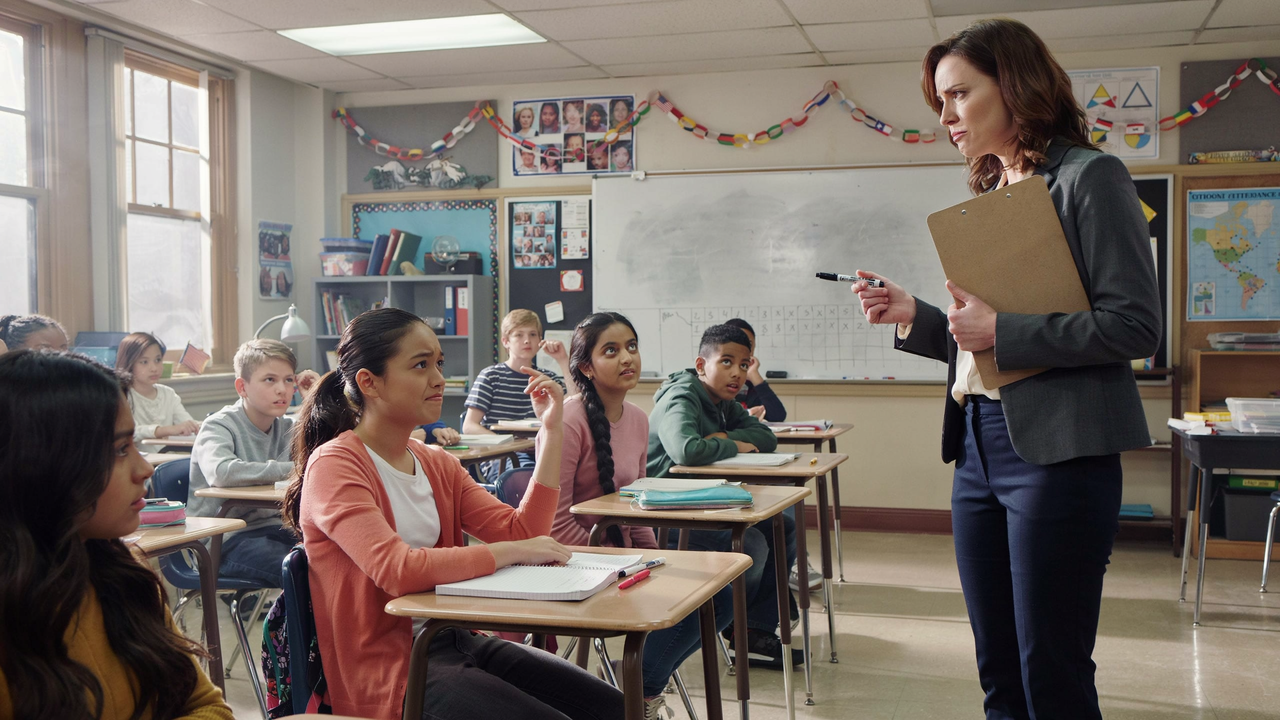
not the actual photo

'My teacher called me Katherine instead of learning how to pronounce my name, so I called her by her first name for the rest of the year?'

In 6th grade I had this math teacher named Ms White who was pretty strict.

Our school was honestly very diverse but she was very (as her name

suggests) white. I have a pretty difficult name to say as it is Hawaiian (I am

half Japanese half white but both sides lived in Hawai’i for 3+ generations).

My name is Kau’i. It looks daunting but it’s just Ka-ooh-ee. So honestly not

very difficult imo?

Anyway, Ms White stumbled on my name when she read attendance, so I

did the usual “Oh, It’s pronounced __”. You know what she did? She literally

went “Uh I’ll call you Katherine”. Let me tell you, I was FLABBERGASTED.

Like it was a private very diverse school and I had never had this happen.

Teachers had horribly mispronounced my name but this was definitely new.

Also, no offense to any Katherines, but I love my name and it has a lot of

meaning to my family (and tbh it sounds cooler than Katherine

TAKE NO OFFENSE PLEASE 🙏). I was so surprised that for the first 2 weeks I kinda

just let it happen. But at some point it was just irking me because she made

no effort to learn how to say my name, I never told her she could call me

Katherine, and on top of that, she could’ve even asked me for a nickname

or my middle name or something!

So I started calling her by her first name: Jessica. She was the kind of

teacher who NO ONE called by her first name. Even the other teachers

called her Ms White. I had to look in the yearbook from the year before to

find it. But from that day on, she was Jessica. And when that didn’t make

her mad enough, she was Jessie, or Jess, or JJ or any other nicknames I

could think of. She never yelled at me or anything, she just corrected me

and said “Ms White” and then I would ignore it. For example: “Jessa-“ “Thats

Ms White.” “Jessica, I don’t get number three. Can you explain?” She never

lost her temper but was always annoyed lol. She called me Katherine for

the rest of the year, so not the most satisfying story, but I was happy with

that revenge. Ms White apparently got fired two years later for

microagressions towards students of color, and honestly, I’m not surprised.

I just wanted to share this story because I figured yall would enjoy it.. edit:

sorry for skyscraper of text 😭 i tried to format it better lol

edit 2: hey, i’m getting a lot of confusion about the pronunciation of my

name! many comments are very kind and just saying how they originally

thought it was pronounced like Maui. Others are telling me I pronounce my

name wrong? Idk man but I’ll do my best to explain some basics for y’all.

My name: My name is Kau’i. In Hawaiian each vowel is pronounced, none

are silent. However native speakers tend to blend them together. For

example: a + u would make an ah-oo sound. If you say that fast it sounds

like “ow”. So when a native speaker says my name it may sound like Kow-ee,

very similar to Maui. However there is a difference because really the o is

still pronounced a little more! In addition one difference between Kau’i and

Maui is the okina- the little apostrophe thingy (in reality it’s a slightly

different symbol but i’m lazy. This basically counts as a consonant, and as a

little pause. So basically the au and i sounds do not merge together

because they are separated by the okina.

Now, why can’t you just say Kow-ee? Good question. You can. I’ll still

respond. But basically you are saying my name as if it has no okina when it

does. Not a big deal. But that’s the difference.

Hawai’i: Also there are some people saying i’m wrong because Hawaii isn’t

pronounced hah-wa-ee-ee. true, it isn’t! The traditional spelling is Hawai’i

and pronunciation is hah-vai-ee. basically the a and the h merge, the w and

the a and the i merge (the w makes a v sound since it’s surrounded by

vowels) and then we have an okina and an i. Hence hah-vai-ee. Why it’s

spelled and pronounced differently normally is bc it’s the anglicized

version. almost same spelling just no okina, and the w is seen as making the

w sound since that’s how it is in English.

I am not all knowing (i don’t even speak hawaiian, i just know some basic

facts) but feel free to ask me more questions! hope this helps

A person’s name is often the first piece of their identity they offer the world.

When someone refuses to learn it, the injury can feel surprisingly personal, especially for a child whose name carries family history, cultural meaning, and a sense of belonging.

Being renamed for another person’s convenience does not feel like a harmless mistake.

It can feel like being told that part of oneself is too troublesome to deserve recognition.

Kau’i was not upset because her teacher initially struggled with an unfamiliar pronunciation.

Mistakes happen, and she immediately explained how to say it.

The deeper problem was Ms. White’s refusal to make an effort afterward.

By unilaterally calling her “Katherine,” the teacher replaced the student’s identity with something easier for herself. Kau’i’s decision to call the teacher Jessica, Jess, or JJ mirrored that disrespect back to her.

The response was playful and defiant, but underneath the humor was a sixth grader trying to recover some control in a classroom where the adult held nearly all the authority.

Some readers may view the nicknames as ordinary childhood rebellion.

A fresher interpretation is that Kau’i created a small experiment in empathy.

Each time the teacher corrected “Jessica” to “Ms. White,” she demonstrated that forms of address mattered to her.

Yet she continued denying the student that same courtesy.

This imbalance reveals why the behavior felt more serious than simple mispronunciation.

One person expected her preferred identity to be respected while treating another person’s preference as optional. Kau’i could not force fairness, so she exposed the contradiction.

Education scholar Rita Kohli has described the repeated mispronunciation of students’ names as a classroom microaggression that can weaken trust and undermine learning.

The National Education Association also cites educator Ranjana Wan, who explains that mishandling a student’s name can negate an important part of their identity.

Their point is not that every pronunciation error is malicious.

The harm develops when correction is available but effort is withheld, communicating that the student’s culture is less worthy of attention than the teacher’s convenience.

Correct pronunciation, by contrast, helps students feel recognized, valued, and respected within the learning environment.

That distinction explains why Kau’i tolerated mistakes but rejected being renamed. She was not demanding instant perfection.

She wanted curiosity, practice, or even a respectful conversation about an acceptable nickname. Ms. White offered none of those.

Although the student’s retaliation did not change the teacher’s behavior, it protected something meaningful: the belief that her real name deserved to occupy space in that classroom.

The practical lesson is simple.

When someone teaches others how to pronounce their name, the respectful response is to listen, repeat it, and keep trying.

Imperfect effort builds connection. Refusal turns inconvenience into exclusion.

Here’s what the community had to contribute:

These Redditors suggested renaming the teacher until she respected the student’s name

nikknakkpattywhakk − Should have just made up a name, like she did. ..

"Hey Brenda, a little help over here, please! " Either way, this is classic!

Nice job :)

LilDragon2991 − I would've called her Steve. "Since we are just making up

new name's now 🤷🏻‍♀️"

Ok_Homework_7621 − Had a teacher like that with a foreign last name. My

name is incredibly simple and the most common and unoriginal, so

common there would often be three girls with my name in a class, but she

said another one fit better. So I made sure to always use a warped

translation of her name.

She called me out on it and I told her I'd stop when she used my name. She

did it one more time, probably to test me, so I did it again, too. Then she

stopped. And we didn't even actually use names for teachers, "professor"

was fine, so me making sure to always add her name was already annoying.

This group praised Kau’i’s beautiful name and said its pronunciation was easy to learn

CasperCackler − You literally just have to say the letters that spell your

name to pronounce it correctly. Clearly Ms. White didn’t have anything to

do with language classes.

coffeeandarabbit − What a cool name! I would have thought it was

pronounced Kow-ee so I am glad you put the little guide there, you just

pronounce every syllable like you do in Japanese, which you only need

explained once to know. Is that usually how it works in Hawaiian?

(It’s nice to have an idea of how languages work just in case you ever meet

someone else whose name pronunciation works the same! )

squirrel_haka − Kauʻi is so easy! Mary Kawena Pukui was largely responsible

for the Hawaiian dictionary, and Kawena is short for

Kawenaʻulaokalaniahiʻiakaikapoliopelekawahineʻaihonuaināleilehuaapele.

How about that, Jessica?

WinterFrosting860 − Good job you! !! I used to teach sixth grade and I had a

whole speech I gave each year about how I wanted students to correct me

if/when I pronounced a name incorrectly.

I did ask for a little grace because I had about 100 names to learn but I also

made sure that they knew I would be upset if I found out I had been saying

their name wrong for three months. It’s not that hard.

I would write down the pronunciation and ask if it was correct and then tell

them to remind me if I got it wrong.

LeseMajeste_1037 − That's such a cool name! JJ's loss for not even trying

to pronounce it.

These commenters criticized the teacher’s arrogance, prejudice, and refusal to respect names

Which_Specific9891 − She literally went “Uh I’ll call you Katherine”. The

caucasity never ceases to amaze me. Literally, 'I'm too lazy to learn your

unique name so I'm giving you a white name. ' You were way, way kinder

than I would have been over this, friend. I'm really bad at names, I'm

forgetful-- but I would never just assign a person a name against their will

You were way nicer than I would have been. That was beyond

unacceptable.

jonny3jack − Sounds like Ms white had issues with other "colors" than her namesake.

RainbowRiki − Sounds like she only liked "Christian" names. Refusing white

students' nicknames and ethnic students' legal names. I had an old boss ask

me, "Have you ever thought about not using an ethnic name? " And he was

a white guy who hyphenated to add his spouse's Greek name 🙄

A name carries identity, family history, and personal significance, so replacing it without permission was never a harmless shortcut.

Many readers admired Kau’i for turning the teacher’s disrespect back on her with a clever taste of the same treatment, though others may feel the year-long nickname battle solved little.

Do you think calling Ms White by random nicknames was justified, or should the school have stepped in sooner?

How would you respond if someone refused to learn your name? Share your take below.