
Finding a piece of home in a foreign country can mean everything.
A familiar store, a familiar language, and familiar food can make an unfamiliar place feel a little less lonely.
But what happens when that community no longer feels like a safe space?
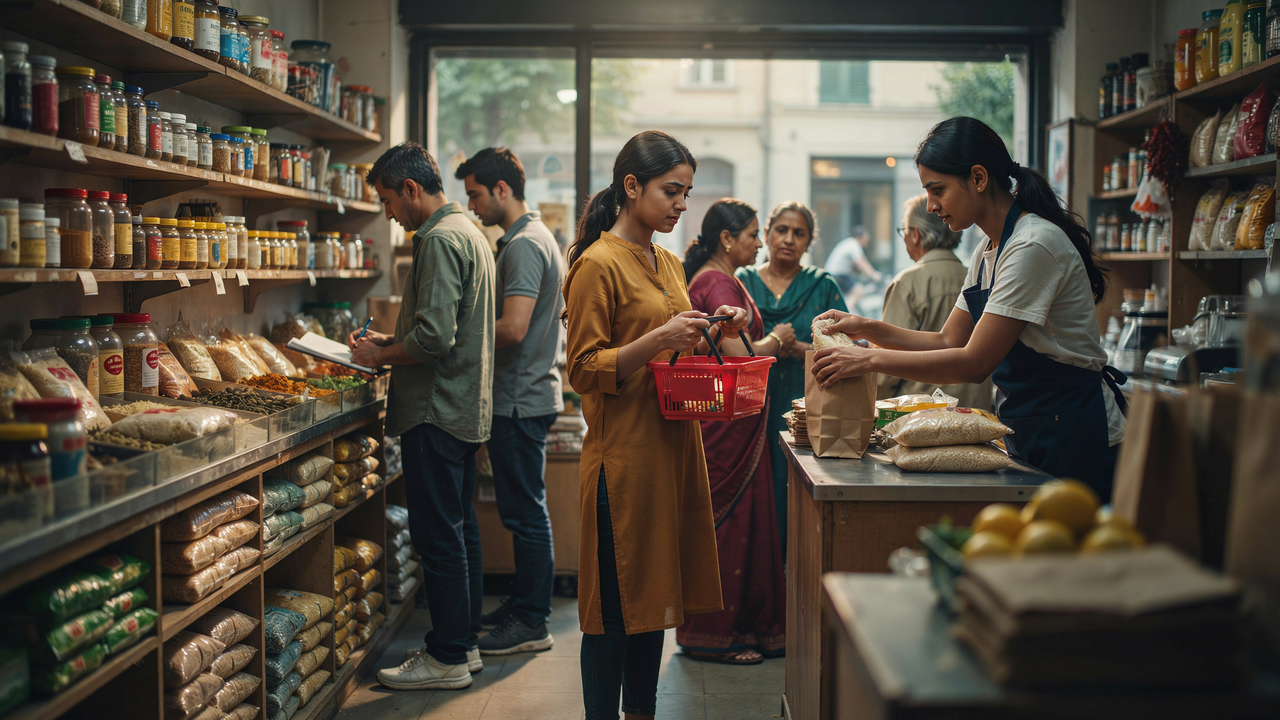
The original poster moved from India to Europe and regularly visited a small Indian store near her home.
In the beginning, it felt like a welcoming connection to her culture. However, over time, the people there started acting differently toward her in ways she could not explain.
After one unexpected conversation in the store, she began wondering if the reason behind the change had nothing to do with her actions, but with assumptions people made about her background.
Scroll down to read the full story and the painful realization she shared.
Indian student noticed a familiar store treating them differently after a hidden judgment emerged




















































One of the greatest disappointments people experience is discovering that leaving a place does not always mean leaving its divisions behind.
Many move abroad hoping to be seen simply as individuals, only to find that old prejudices sometimes travel farther than borders.
When that happens, the pain is often intensified because the discrimination comes from the very community that was expected to provide comfort and belonging.
In this story, the student was not only searching for familiar food but also for a sense of home in an unfamiliar country.
The neighborhood Indian grocery store initially offered exactly that a place of shared language, culture, and community.
The sudden shift in how employees interacted with them felt confusing because nothing obvious had changed.
Only later did the overheard conversation about caste and the earlier intrusive questions begin to form a possible explanation.
Whether the assumption was correct or not, the emotional impact remained the same.
Being treated differently after feeling welcomed can create a deep sense of isolation, especially when someone is already adapting to life in a foreign country.
It is the uncertainty as much as the behavior itself that becomes emotionally exhausting.
An interesting perspective is that prejudice does not always depend on certainty.
Sometimes it thrives on ambiguity. In environments where social status has historically been emphasized, people may instinctively search for clues, such as names, hometowns, occupations, language, or diet, to categorize others before they know them.
Ironically, refusing to participate in that system can itself become suspicious to those who rely on it.
The poster’s reluctance to disclose increasingly personal information may have been interpreted as hiding something, when in reality it reflected a perfectly reasonable desire for privacy.
This illustrates how discriminatory systems often pressure people into proving where they belong, even when they reject the system altogether.
Understanding these dynamics helps explain why this experience feels so unsettling.
The issue is not simply whether the store employees accurately identified the poster’s caste or background.
It is that they appeared willing to alter their treatment based on assumptions that should never determine another person’s worth.
The poster’s instinct to avoid revealing increasingly personal details was not unreasonable; privacy is a healthy boundary, not an admission of guilt.
More importantly, no one should feel compelled to disclose their caste, religion, or family background simply to receive basic respect.
Perhaps the most hopeful lesson is that culture and prejudice are not the same thing.
A person can cherish their language, traditions, food, and heritage while rejecting the hierarchies that have historically divided communities.
Diaspora communities are often strongest when they preserve what enriches their culture and leave behind what diminishes the dignity of others.
Respect should never have to be earned through ancestry, only through our shared humanity.
Here’s what Redditors had to say:
These Redditors condemned casteism as cruel, outdated, and deeply oppressive


 Husband Can’t Work After A Devastating Accident, So His Wife Starts Shopping For A New Life















This group urged the poster to stop shopping there and take their money elsewhere




































These users discussed whether younger generations and diaspora communities reject caste divisions













These Redditors noted caste prejudice is obvious yet meaningless to outsiders







This story struck a nerve because it highlights how old social divisions can follow people across borders.
While many readers agreed the poster’s suspicions couldn’t be proven with certainty, they also felt the repeated questions, subtle remarks, and change in behavior painted an unsettling picture.
Others urged caution against assuming motives without direct evidence. What do you think? Is this a case of caste prejudice resurfacing far from home, or could something else explain the cold treatment?
Share your perspective in the comments below.