
A person’s name is more than just a word. For many people, it carries family history, culture, and a connection to where they come from.
That is why having someone dismiss it without even trying can feel far more personal than a simple pronunciation mistake.
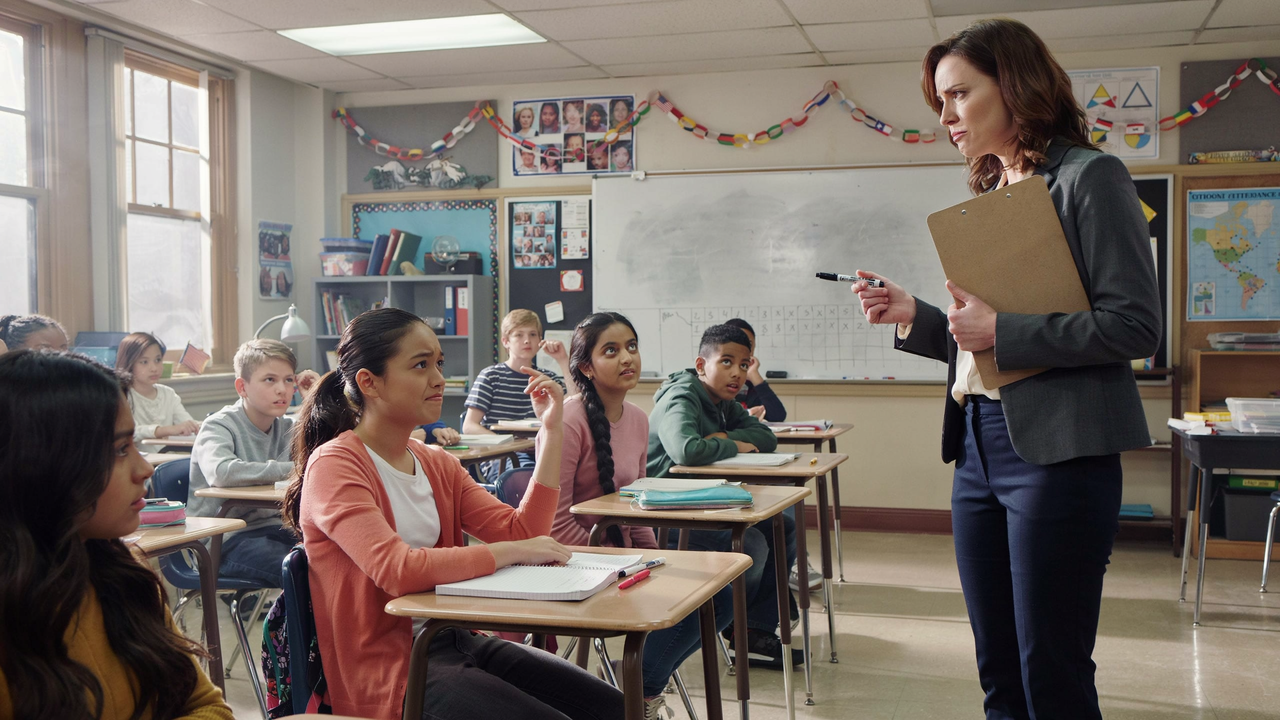
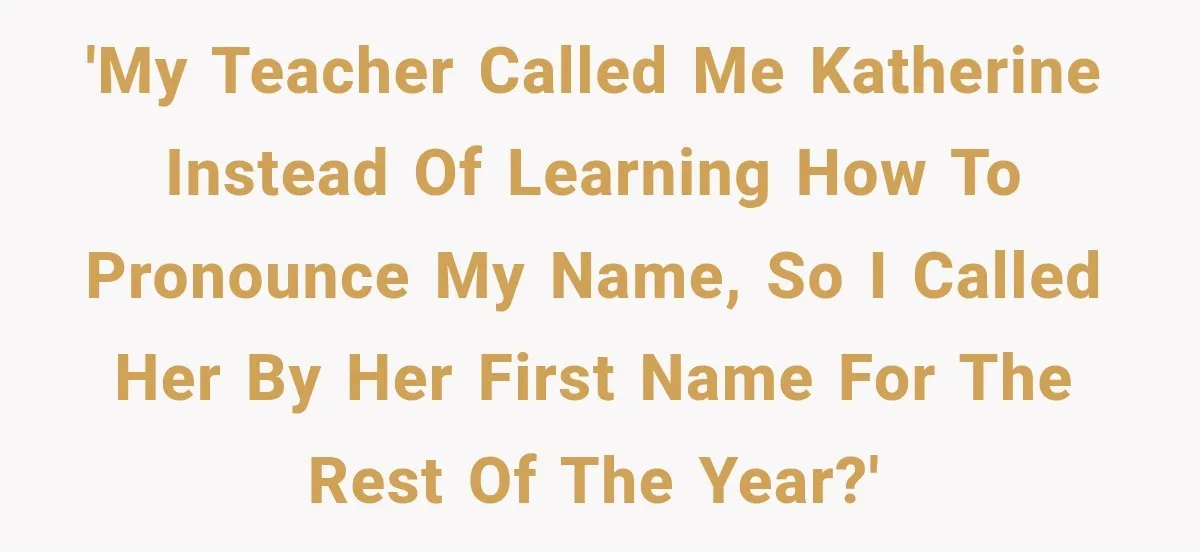
This Reddit user shared a moment from sixth grade when a teacher struggled with her Hawaiian name during attendance.
Instead of learning how to say it, the teacher made a surprising decision that left the student completely stunned.
After letting it go for a while, she eventually found a creative way to make her feelings known without causing a major confrontation.
Scroll down to see the clever response that followed.
Student challenged a teacher who refused to respect her Hawaiian name



























































A person’s name is often the first piece of their identity they offer the world.
When someone refuses to learn it, the injury can feel surprisingly personal, especially for a child whose name carries family history, cultural meaning, and a sense of belonging.
Being renamed for another person’s convenience does not feel like a harmless mistake.
It can feel like being told that part of oneself is too troublesome to deserve recognition.
Kau’i was not upset because her teacher initially struggled with an unfamiliar pronunciation.
Mistakes happen, and she immediately explained how to say it.
The deeper problem was Ms. White’s refusal to make an effort afterward.
By unilaterally calling her “Katherine,” the teacher replaced the student’s identity with something easier for herself. Kau’i’s decision to call the teacher Jessica, Jess, or JJ mirrored that disrespect back to her.
The response was playful and defiant, but underneath the humor was a sixth grader trying to recover some control in a classroom where the adult held nearly all the authority.
Some readers may view the nicknames as ordinary childhood rebellion.
A fresher interpretation is that Kau’i created a small experiment in empathy.
Each time the teacher corrected “Jessica” to “Ms. White,” she demonstrated that forms of address mattered to her.
 Student Mocked For Refusing To Donate Blood, Then Dropped One Sentence That Silenced The Entire Class
Yet she continued denying the student that same courtesy.
This imbalance reveals why the behavior felt more serious than simple mispronunciation.
One person expected her preferred identity to be respected while treating another person’s preference as optional. Kau’i could not force fairness, so she exposed the contradiction.
Education scholar Rita Kohli has described the repeated mispronunciation of students’ names as a classroom microaggression that can weaken trust and undermine learning.
The National Education Association also cites educator Ranjana Wan, who explains that mishandling a student’s name can negate an important part of their identity.
Their point is not that every pronunciation error is malicious.
The harm develops when correction is available but effort is withheld, communicating that the student’s culture is less worthy of attention than the teacher’s convenience.
Correct pronunciation, by contrast, helps students feel recognized, valued, and respected within the learning environment.
That distinction explains why Kau’i tolerated mistakes but rejected being renamed. She was not demanding instant perfection.
She wanted curiosity, practice, or even a respectful conversation about an acceptable nickname. Ms. White offered none of those.
Although the student’s retaliation did not change the teacher’s behavior, it protected something meaningful: the belief that her real name deserved to occupy space in that classroom.
The practical lesson is simple.
When someone teaches others how to pronounce their name, the respectful response is to listen, repeat it, and keep trying.
Imperfect effort builds connection. Refusal turns inconvenience into exclusion.
Here’s what the community had to contribute:
These Redditors suggested renaming the teacher until she respected the student’s name














This group praised Kau’i’s beautiful name and said its pronunciation was easy to learn























These commenters criticized the teacher’s arrogance, prejudice, and refusal to respect names







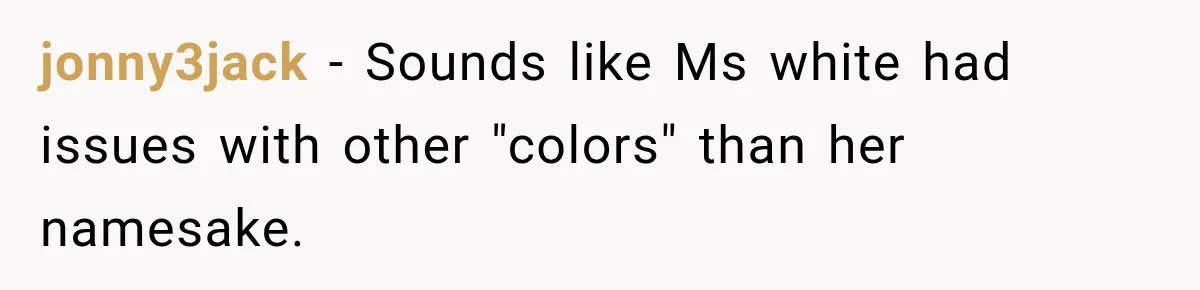




A name carries identity, family history, and personal significance, so replacing it without permission was never a harmless shortcut.
Many readers admired Kau’i for turning the teacher’s disrespect back on her with a clever taste of the same treatment, though others may feel the year-long nickname battle solved little.
Do you think calling Ms White by random nicknames was justified, or should the school have stepped in sooner?
How would you respond if someone refused to learn your name? Share your take below.